Contact us for construction services
Thank you! Your submission has been received!
Oops! Something went wrong while submitting the form.


A bumper is not the same job as a metal panel, and most painters who have worked on both know it without having to think about why. The surface behaves differently, the preparation requirements are stricter, and the margin for error on adhesion is smaller, because polypropylene simply does not hold paint the way steel or aluminium does.
PP is chemically non-polar, which means it has a low surface energy and resists bonding with coatings. Adhesion promoters exist to address this. They chemically modify the surface to give the paint something to grip. But adhesion promoters work best on a surface that is genuinely clean and stable. Contamination, even at a level that is invisible, can interrupt the bond.
Static charge complicates this in two ways. First, it attracts dust and airborne particles to the surface in the period between preparation and application, exactly the window when a bumper is most vulnerable. Second, high static charge on a plastic surface can affect how the first coat lays down, which influences everything that follows.
Modern vehicles use more PP components than they did ten years ago. Bumpers are the obvious example, but mirror housings, lower trims, and spoilers present the same challenge. Each of them is a visible surface where adhesion failure shows up quickly, and where a repair is both costly and difficult to conceal.
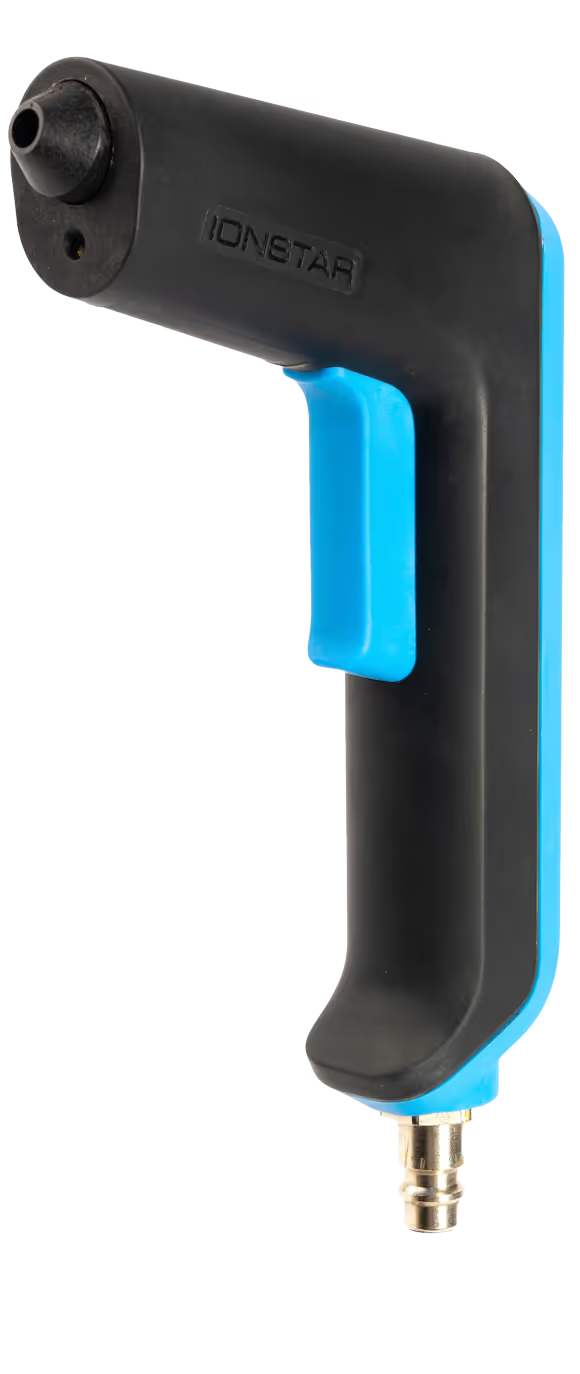
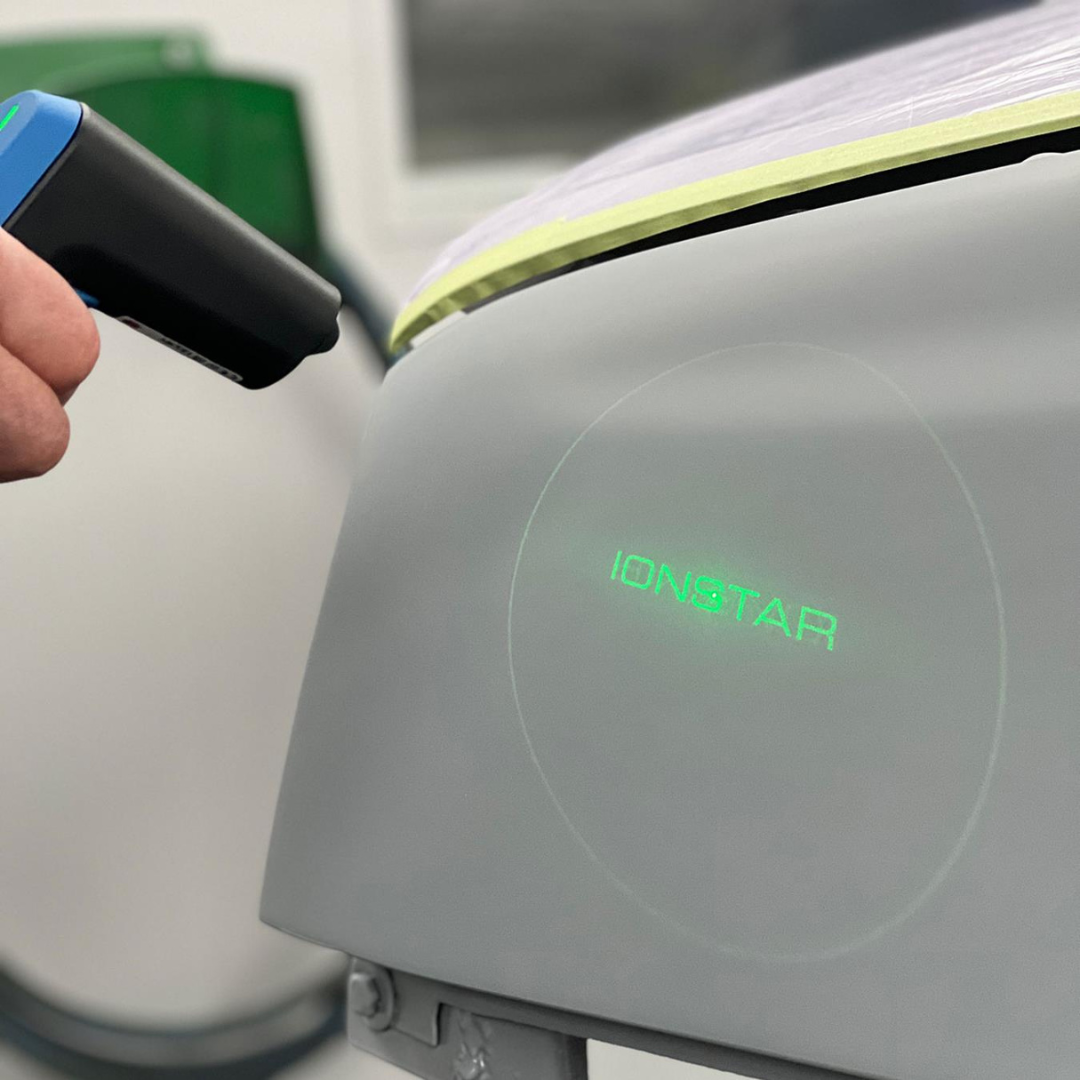
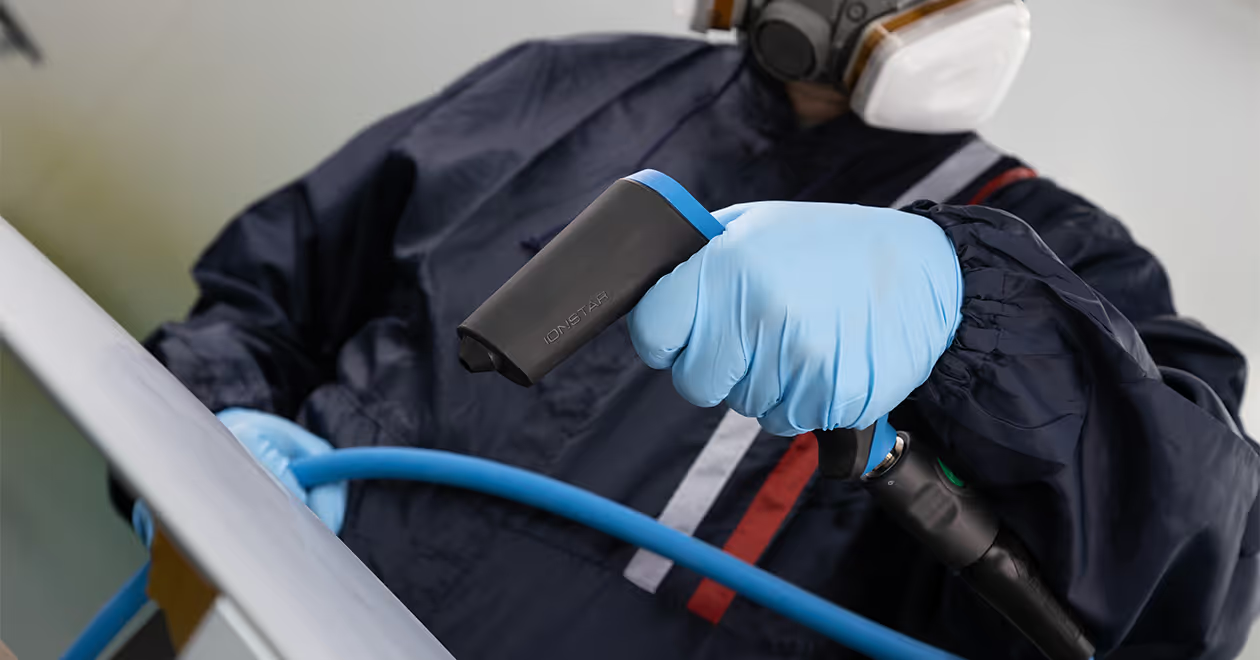
The Fraunhofer Institute tested IONSTAR specifically on PP substrates and found measurable improvements in adhesion performance under controlled conditions. The mechanism is not chemical. The tool does not modify the surface the way an adhesion promoter does. It removes the static charge that can attract contamination and disrupt the coating process during application.
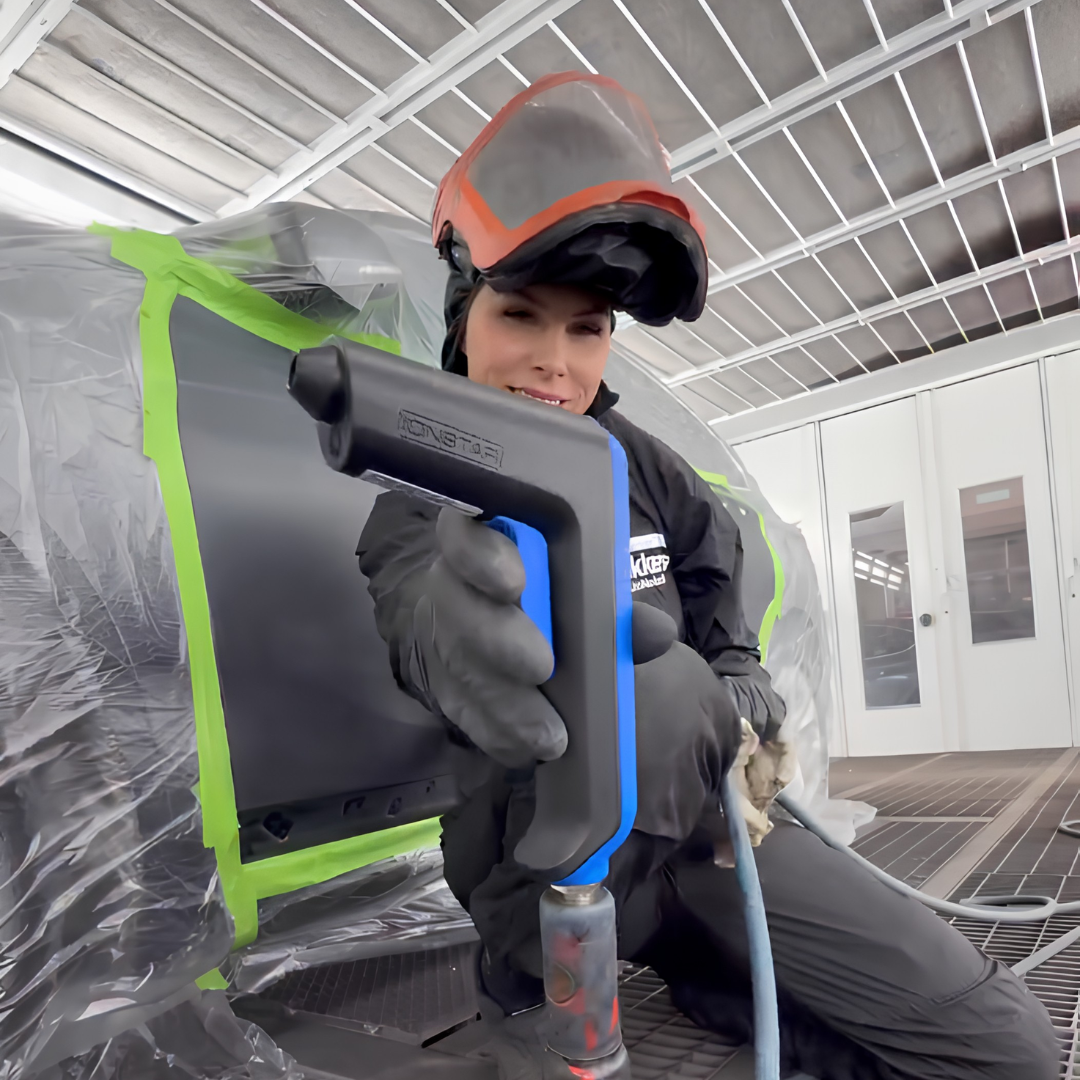
In practical terms, it works best as the last step before the gun goes on. After the surface has been cleaned and primed, neutralising the charge removes one variable that sits between careful preparation and a clean result.
© Copyright 2026 Herrmann Innovations GmbH - Designed by skyisnolimit-Media